Article content
Why White Dolomite Works in Modern Landscapes
White dolomite creates a bright and structured appearance that complements modern gardens, villas, hotels, commercial entrances and public landscape projects. Its neutral white and soft-white tones work well with green plants, timber, concrete, metal and natural stone surfaces. Designers can use it to create visual contrast, define separate areas and provide a clean decorative ground cover without overwhelming the surrounding architecture.
Tumbled Pebbles or Crushed Stone?
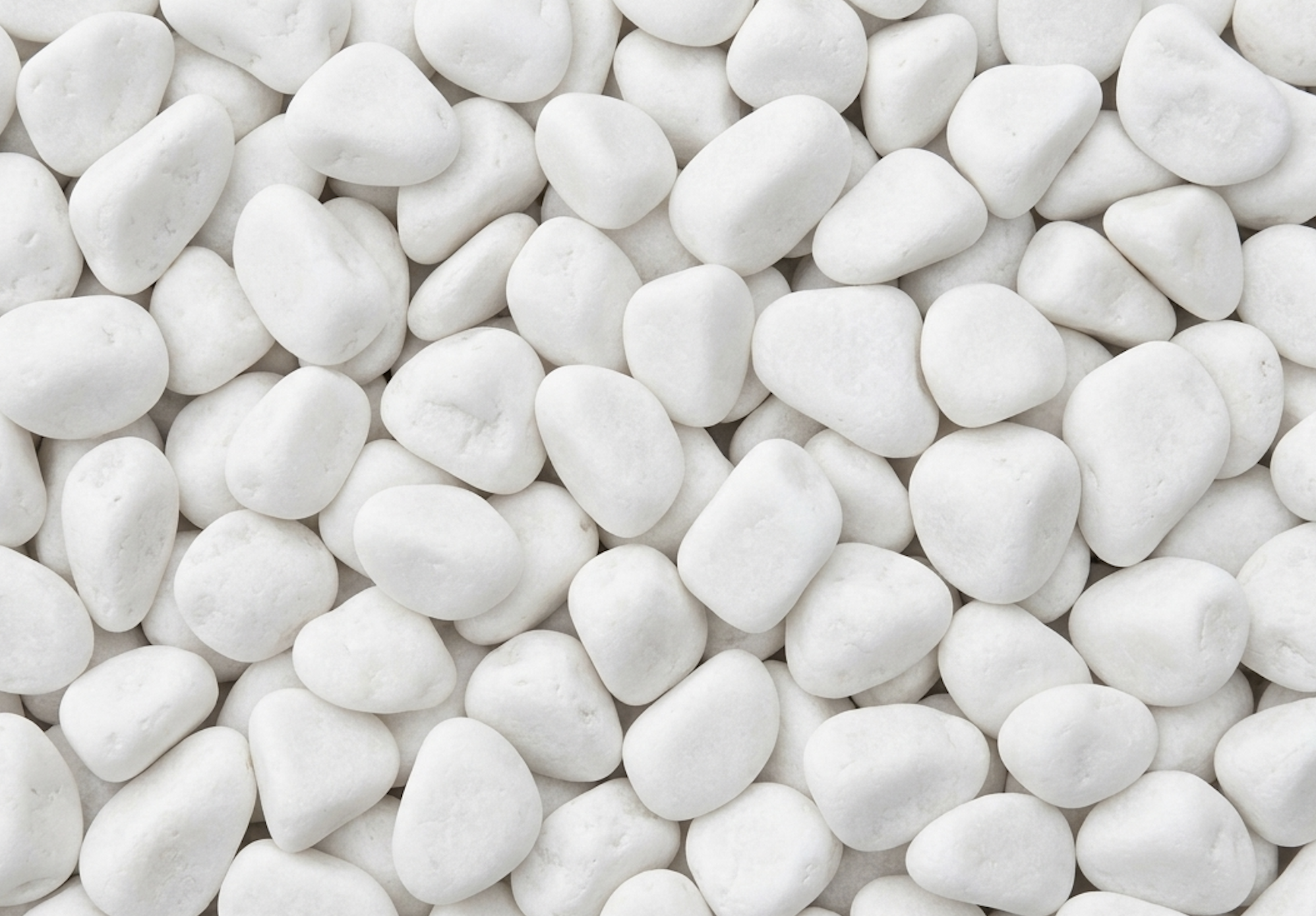
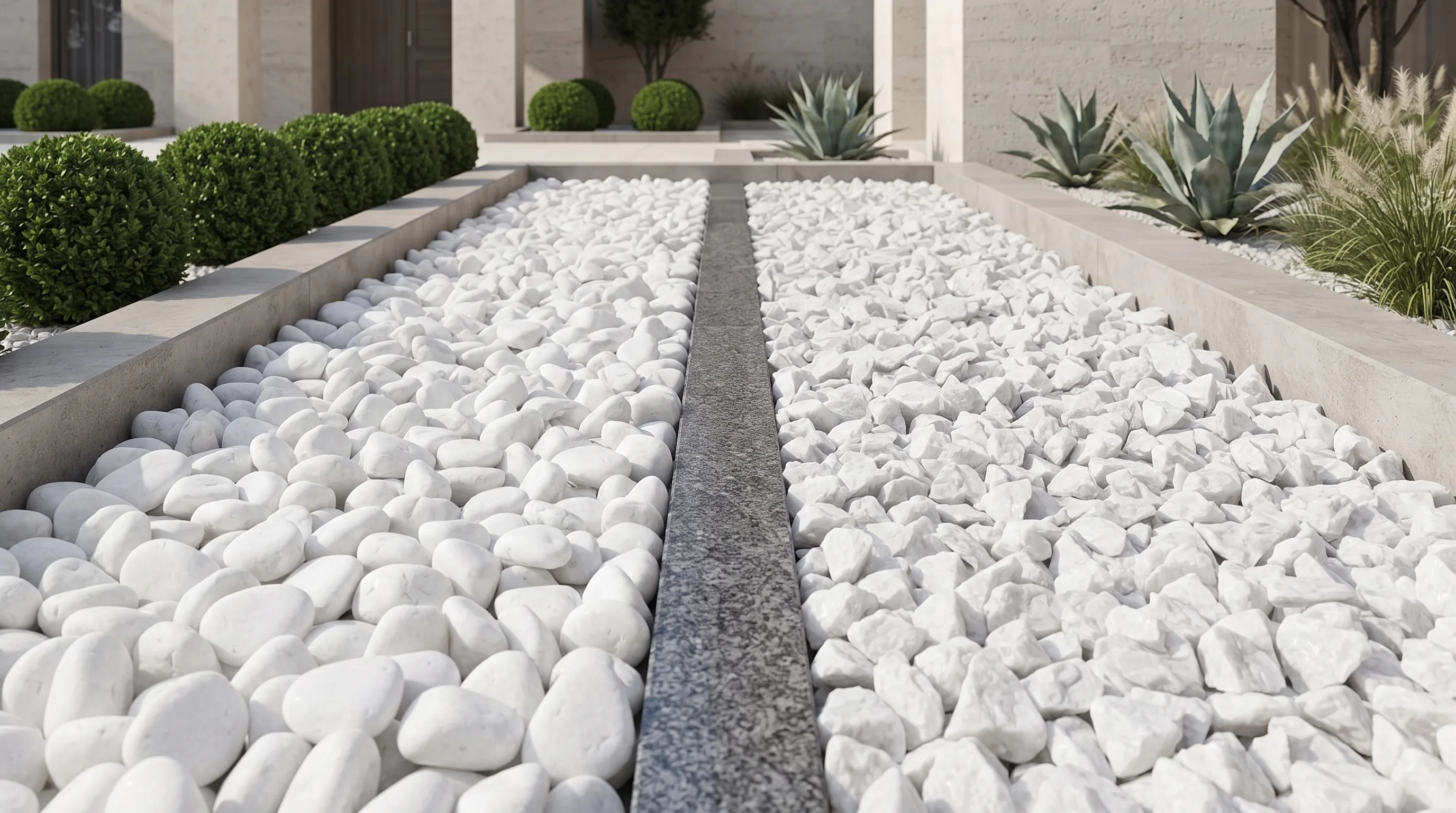
White dolomite tumbled pebbles have smooth, rounded edges and are commonly preferred for visible decorative areas such as flower beds, courtyards, fountains, terraces and garden borders. White dolomite crushed stone has a more angular form that allows the pieces to interlock more effectively. It is suitable for pathways, broader ground-cover areas, drainage layers, landscape borders and large-volume outdoor applications. The right choice depends on the desired appearance, pedestrian use and technical requirements of the project. For a closer comparison of rounded decorative stone and angular alternatives, see our guide to White Dolomite Pebbles vs Marble Chips.
Choosing the Right Dolomite Size
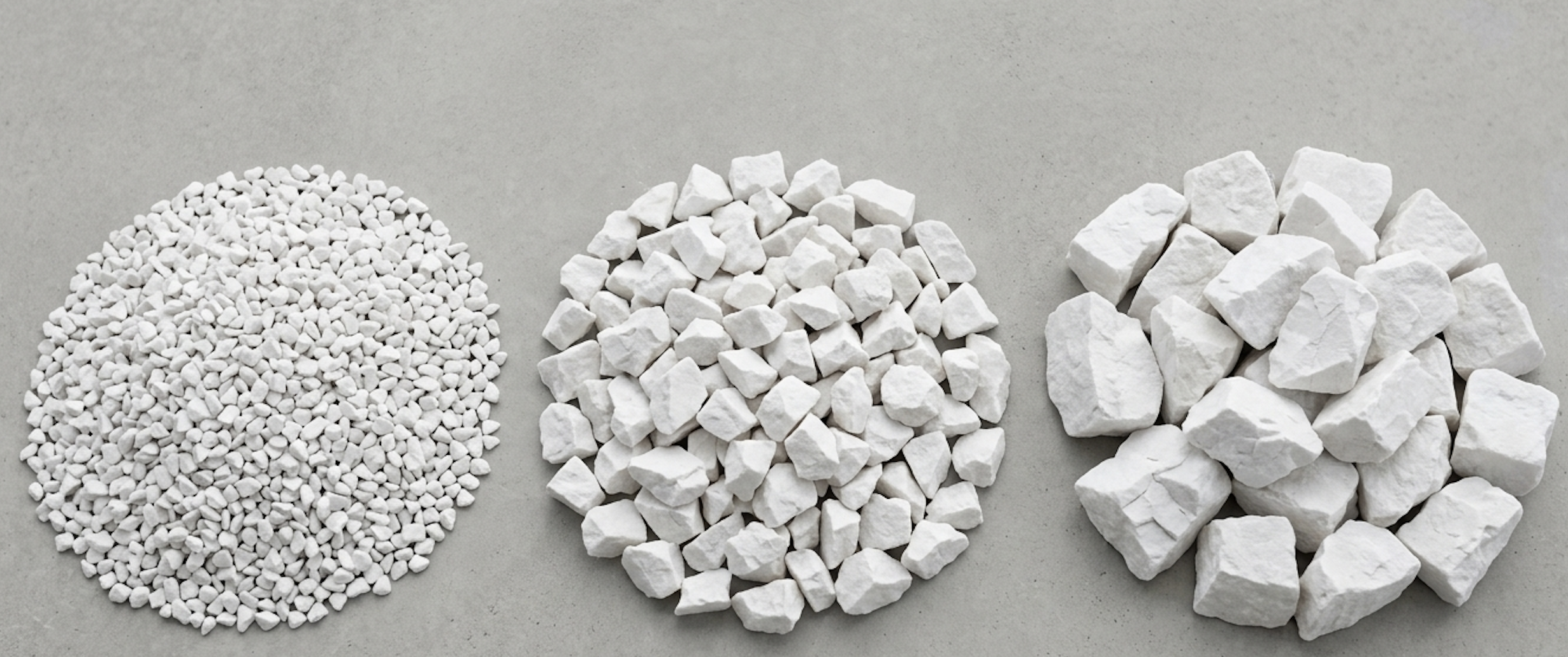
Stone size affects both the appearance and performance of a landscape surface. Smaller sizes such as 1–3 cm and 2–4 cm create a compact and refined finish for plant beds, decorative borders and smaller garden spaces. Medium sizes such as 4–6 cm provide more visible texture and are suitable for courtyards, fountains and feature areas. Larger sizes such as 6–10 cm can be used for bold decorative accents and wider landscape zones. The selected size should match the scale, depth and intended use of the application.
Where to Use White Dolomite
White dolomite can be used around plants, trees and flower beds, along garden paths, between paving elements and beside building entrances. It is also suitable for terraces, hotel landscapes, villa gardens, fountains, courtyards, dry garden designs and decorative borders. In commercial and architectural projects, white dolomite can help organise circulation areas and create contrast between planted zones and hard surfaces.
Installation and Ground Preparation
The ground should be levelled, compacted and cleared of weeds before installation. A suitable landscape fabric can be placed beneath the stone to limit weed growth and reduce mixing with the soil. Edging materials help keep the dolomite within the intended area and maintain clear lines. The required layer depth depends on stone size, site conditions and whether the surface is primarily decorative or intended for occasional pedestrian use.
Cleaning and Maintenance
White dolomite requires limited maintenance, but dust, soil and organic debris can gradually affect its appearance. Leaves should be removed regularly, and the surface can be rinsed with clean water when necessary. Muddy runoff, oil and strongly coloured chemicals should be kept away from visible decorative areas. Occasional redistribution or topping up may be required in paths and frequently used sections.
Planning a Bulk Dolomite Order
Before requesting a quotation, buyers should confirm the required stone type, size range, total quantity, destination and preferred packing method. White dolomite can be supplied in big bags, jumbo bags, palletised packaging or bulk form depending on the project. Updated product photos, size samples, packaging details and loading information should be reviewed before final order confirmation.
White Dolomite Supply from Turkey
Kiyammar Marble supplies White Dolomite Tumbled Pebble Stone and Premium White Dolomite Crushed Stone for landscaping, decorative and project-based applications. Available sizes, packing options and loading plans are confirmed according to current stock, order quantity and destination. Contact Kiyammar Marble to request product photos, size information and a project quotation.