Article content
Why Does White Dolomite Pebble Size Matter?
Choosing the right pebble size changes more than the appearance of a landscape. Size affects surface texture, visual scale, stone movement, coverage, maintenance and how well the material fits around plants, borders and architectural elements. A small pebble creates a finer and more continuous surface, while larger stones create stronger individual texture and visual contrast. The correct choice therefore depends on the scale and purpose of the project rather than one size being suitable for every application. For commercial projects, grading consistency is also important. Buyers should confirm the actual size range and review current product photographs before approving an order.
What Are the Common White Dolomite Pebble Sizes?
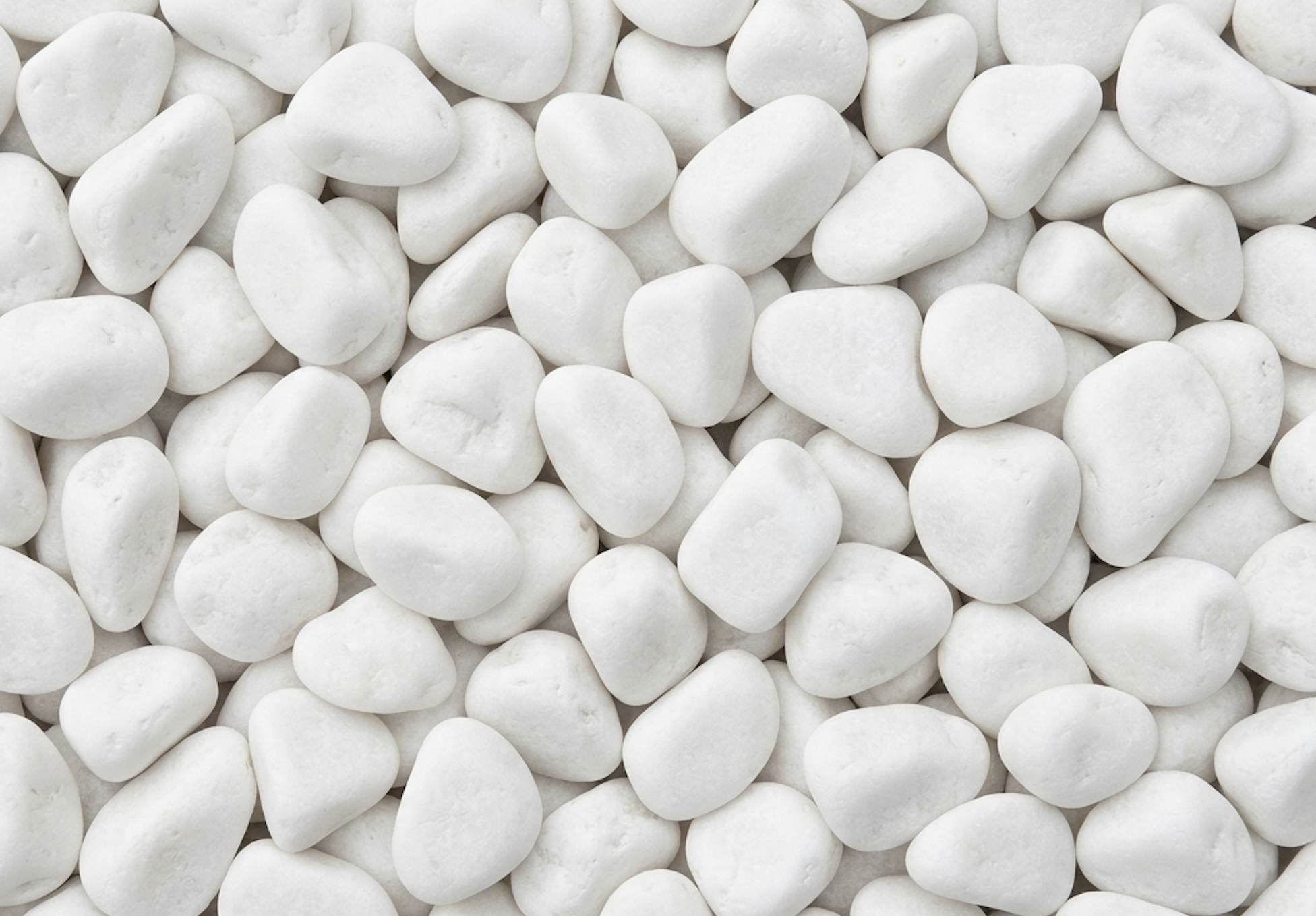
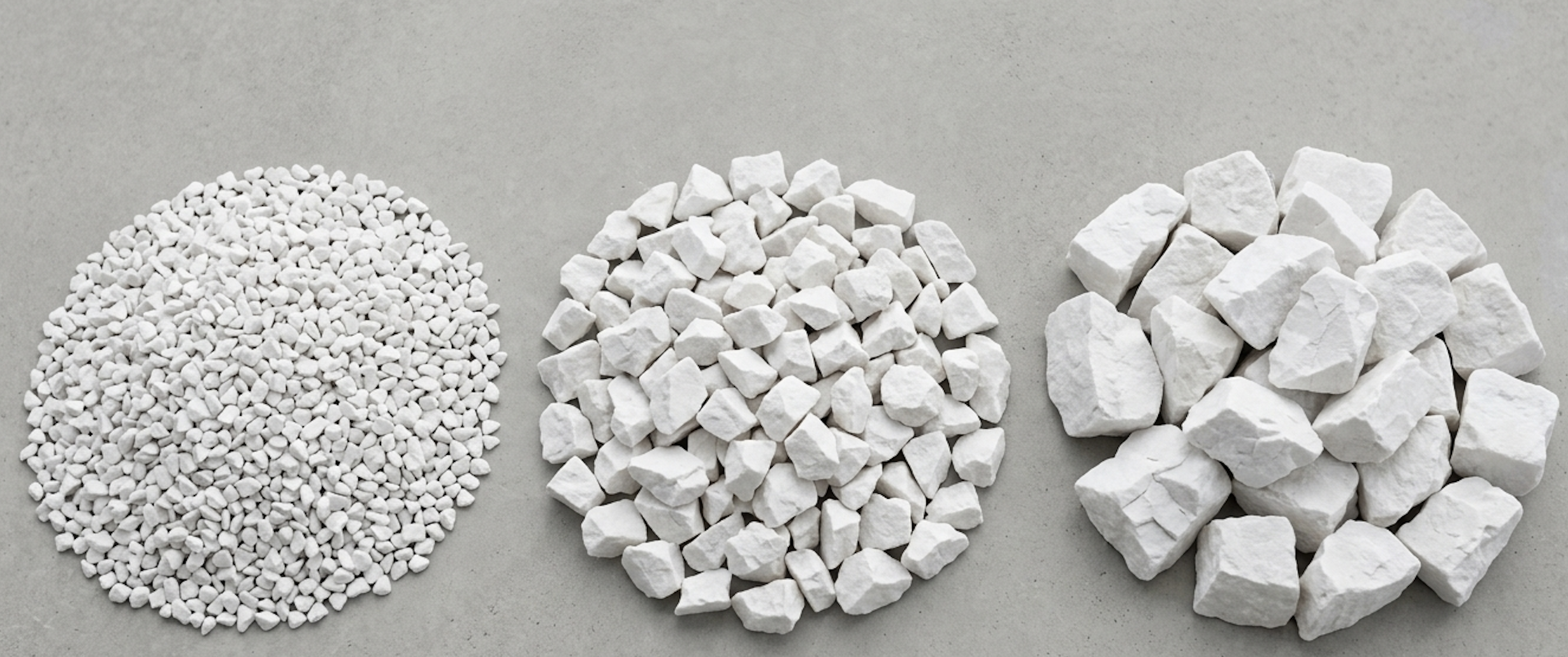
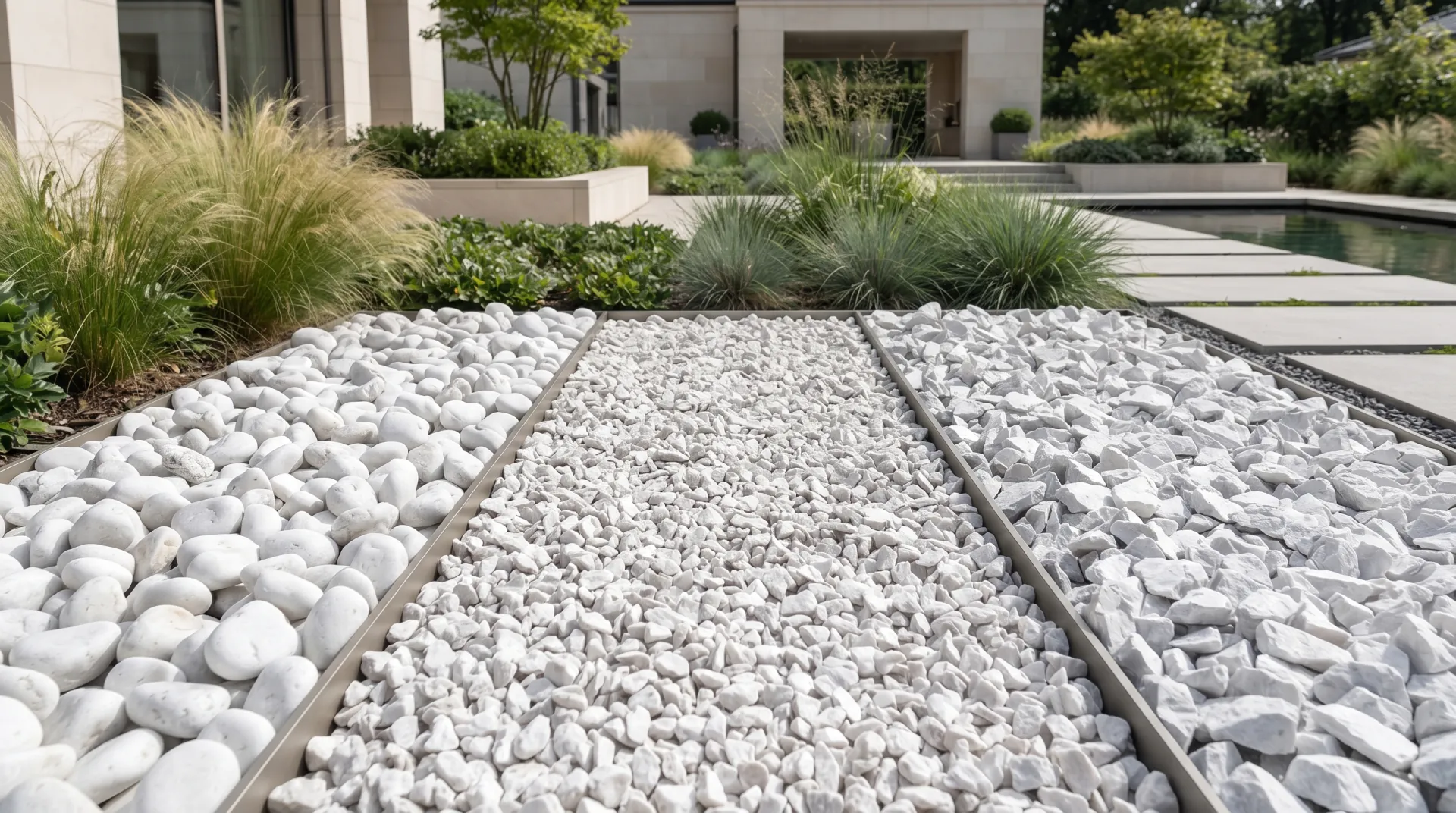
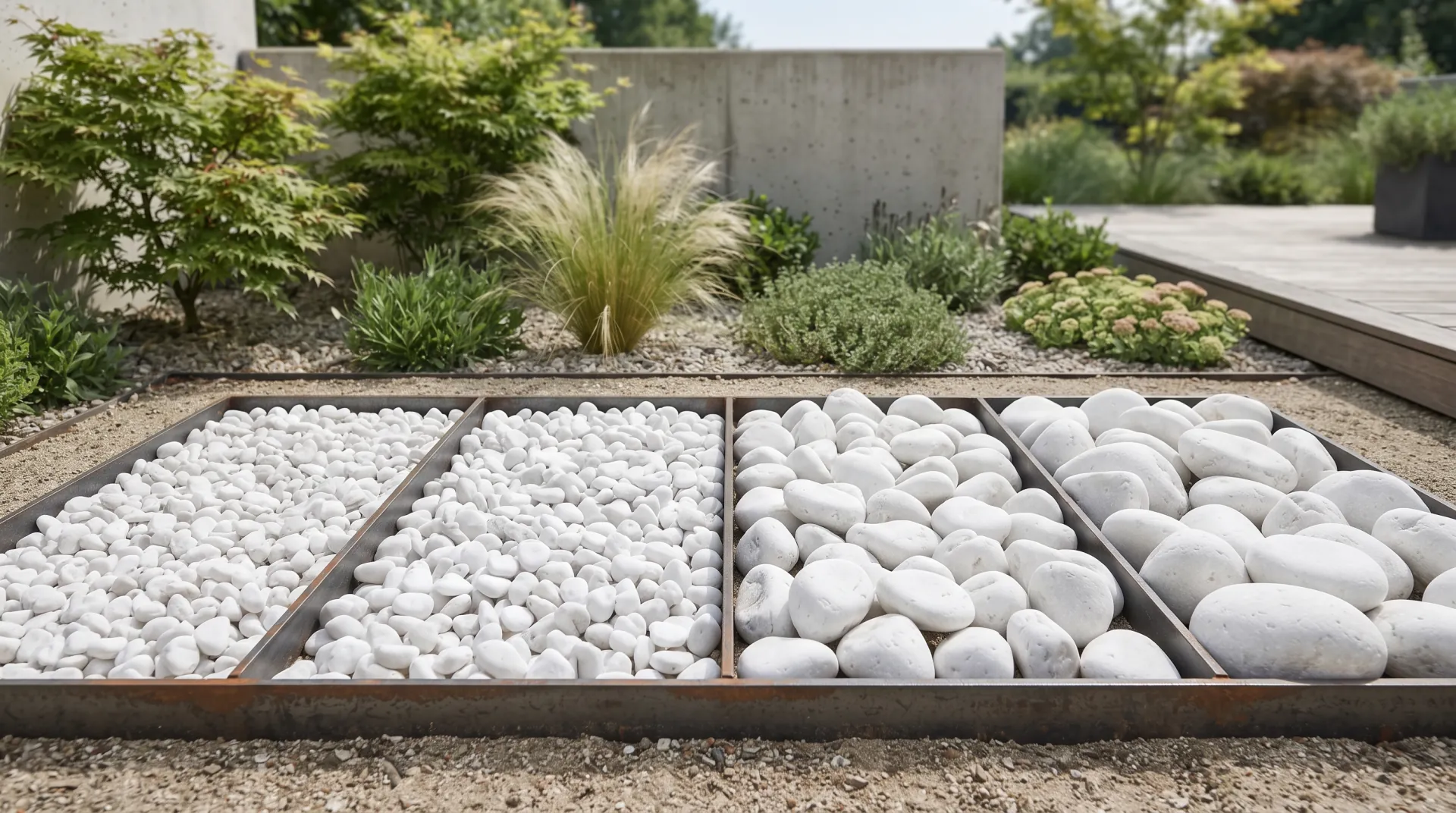
KIYAMMAR currently lists common grading ranges for White Dolomite Tumbled Pebble Stone as approximately 1–3 cm, 2–4 cm, 4–6 cm and 6–10 cm, subject to current stock and order confirmation. KIYAMMAR Marble These ranges represent different visual scales rather than simply small, medium and large products. A 1–3 cm stone creates a finer decorative surface. The 2–4 cm range offers a more visible pebble character while remaining relatively compact. Larger 4–6 cm and 6–10 cm stones produce stronger texture and are often more suitable for feature areas where individual stones are intended to remain visible. Natural stone grading should not be interpreted as precision-manufactured dimensions. Buyers should confirm acceptable grading and visual variation for each order.
1–3 cm: Best for Fine Decorative Surfaces
The 1–3 cm range is useful when the design requires a relatively fine and continuous white-stone surface. Typical applications may include planter beds, narrow decorative borders, small courtyard zones and ground cover around carefully arranged planting. Because the individual pieces are smaller, the overall surface can appear more uniform from a distance. For large commercial areas, buyers should also consider the required stone depth and total volume rather than selecting the smallest grading based on appearance alone.
2–4 cm: A Versatile Landscaping Size
The 2–4 cm range provides a clear pebble appearance without creating the strong visual scale associated with very large decorative stones. It can work well in garden borders, planting beds, stepping-stone surroundings, villa landscaping, hotel gardens and other highly visible outdoor areas. For many designs, this middle range provides a useful balance between surface continuity and visible natural-stone texture. Final selection should still be made from current material photographs or samples where possible
4–6 cm: Stronger Texture for Feature Areas
The 4–6 cm range creates a more pronounced stone texture. Individual pebbles become a stronger part of the design, making the grading suitable for fountains, larger planting zones, entrance landscaping, architectural borders and areas where the stone itself is intended to attract attention. Larger pebbles can also work effectively beside concrete, timber, large-format paving and other architectural materials because the difference in scale creates stronger visual contrast.
6–10 cm: Large Decorative Pebbles
The 6–10 cm range is best treated as a larger decorative element rather than a fine ground-cover material. It can be used around feature planting, water elements, architectural edges, selected dry-landscape areas and projects where large natural stones form part of the visual composition. Because larger stones create more open spaces between pieces, the base layer and installation method become particularly visible and important. The designer should evaluate the material at project scale before specifying large-format pebbles across broad areas.
Which Pebble Size Is Best for Garden Paths?
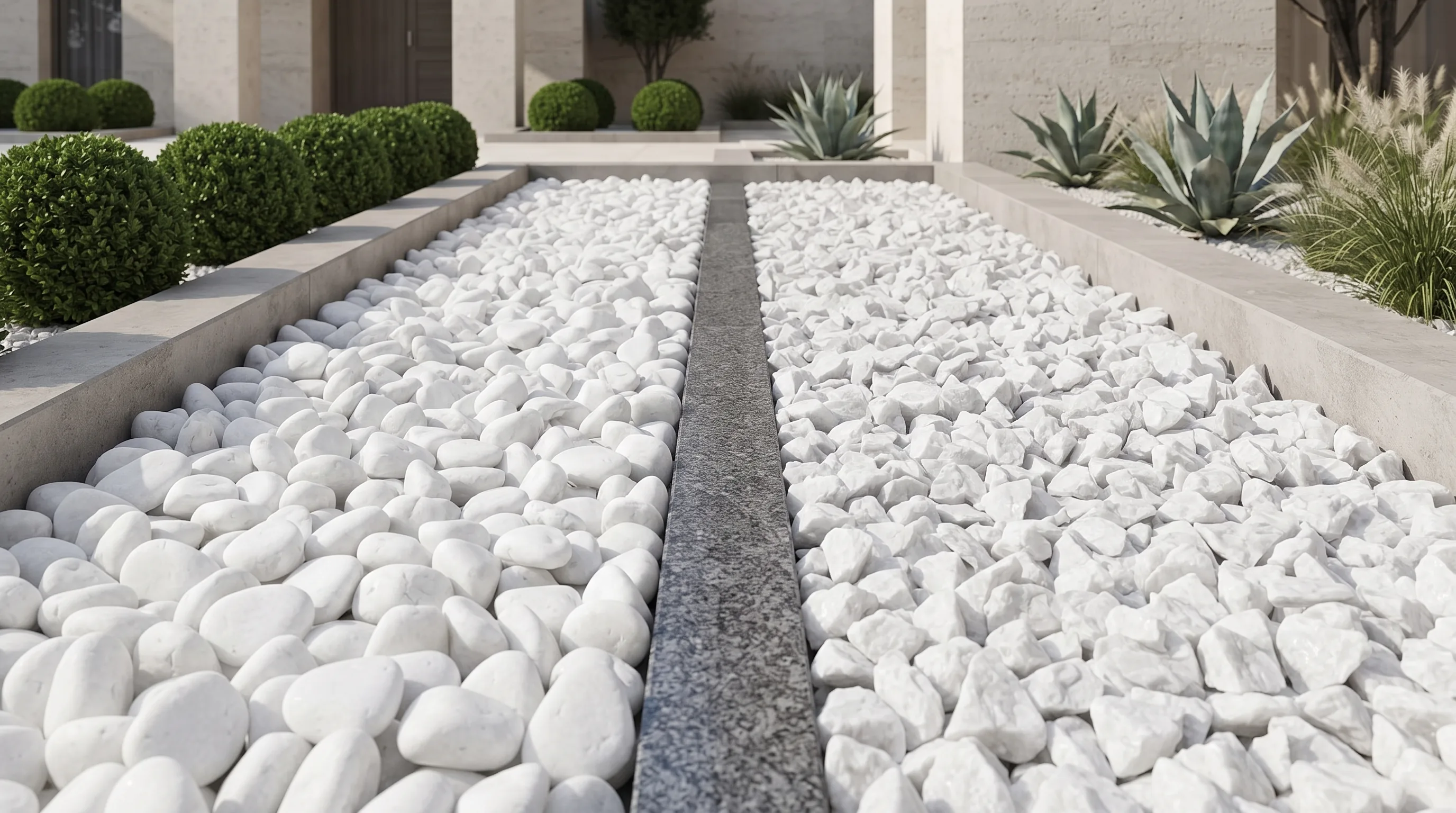
For paths with stepping stones, medium pebble sizes can create an attractive decorative layer around the main walking surface. If the loose stone itself will receive frequent pedestrian traffic, the choice becomes more technical. Rounded pebbles can move under repeated foot traffic more easily than angular crushed material. For this reason, path design should consider the prepared base, edging, drainage, installation depth and whether the pebble is primarily decorative or functional. For heavily used loose-stone walking surfaces, buyers may also compare tumbled pebbles with angular crushed dolomite before final specification.
Which Size Is Best Around Plants and Borders?
Smaller and medium pebbles can create a more continuous surface around planting, while larger pebbles produce stronger visual separation between the stone and vegetation. The scale of the planting should influence the decision. Small ornamental planting may visually suit finer grading, whereas large shrubs, architectural planting and broad beds can accommodate larger pebble sizes. The border width also matters. A narrow strip can become visually crowded with oversized stones, while very small pebbles may appear too fine across large feature areas.
What Should B2B Buyers Confirm Before Ordering?
For bulk orders, buyers should confirm the requested size range, quantity, packing type, intended application and destination before final approval. Current photographs are useful for checking rounding quality, color range and grading consistency. KIYAMMAR’s White Dolomite Tumbled Pebble Stone is supplied for B2B and project requirements, with current sizes, packing options and availability confirmed according to the specific inquiry. When preparing a quotation request, include the preferred grading, approximate quantity and intended application so the material can be evaluated against the project requirement.